
Should You Test Your Water Before Installing a Water Filter in Monmouth County?
Should you test your water before buying a filter in Monmouth County? Learn why testing comes first and what NJ well owners need to know.
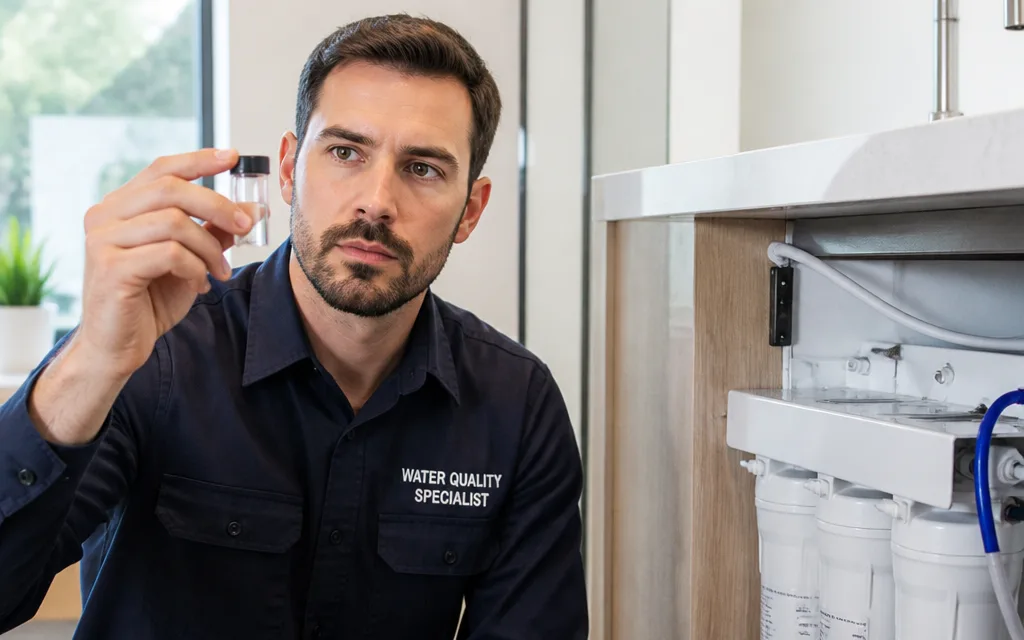
Yes. Testing your water before choosing a filtration system is the sound approach, especially if your home uses a private well or your water quality has changed recently. A test identifies which contaminants or conditions are actually present, so the right system can be selected and sized for your specific water rather than a generic assumption. Best Pro Service offers water testing along with whole-house filtration, under-sink filtration, reverse osmosis systems, water softener installation, iron, sulfur, and odor removal, UV purification, and filtration maintenance for homes throughout Monmouth County, including Morganville, Marlboro, Colts Neck, Manalapan, Englishtown, Freehold, Holmdel, Hazlet, Aberdeen, Matawan, Howell, and Middletown.
Why Testing Comes Before Equipment Selection
Different treatment methods address different problems, so choosing equipment before you know what is in your water is essentially guesswork. The U.S. Environmental Protection Agency advises identifying contaminants before selecting a home treatment device, and Best Pro Service's water-filtration approach follows that same order: testing first, then matching equipment to the result. A water softener, a UV purifier, and a reverse osmosis system each solve a different issue, and a test is what tells you which one (or which combination) your home actually needs.
- Hardness results help determine whether a water softener is needed and how it should be sized.
- Bacteria results factor into decisions about UV purification equipment.
- Iron, manganese, and sulfur levels guide which filtration media will handle the issue effectively.
This is why two homes in the same town can need two different systems. A test tells you which category of treatment applies to your water, not just that "filtration" in general is a good idea.
Private Wells in Monmouth County Have a Legal Testing Requirement
If your home uses a private well, testing is not only a good idea, it is often required. New Jersey's Private Well Testing Act requires testing of untreated private-well water before many real-estate closings, and the required panel is county-specific. Monmouth County is among the counties where mercury analysis is part of that required panel.
The Private Well Testing Act panel covers parameters including:
- Total coliform bacteria and E. coli
- Nitrate
- Lead and arsenic
- Iron and manganese
- pH
- Volatile organic compounds
- Synthetic organic compounds
- Gross alpha activity
- Statewide PFAS testing for applicable property transactions
This list is a useful reminder that "water quality" is not one single problem. A home can have a bacteria issue, a hardness issue, a metals issue, or some combination, and each shows up differently in a test result. For well owners, verified results should come from a certified laboratory recognized under New Jersey's private-well guidance, rather than relying on taste, color, or appearance alone.
Reasons to Test Outside of a Real Estate Transaction
You do not need to be buying or selling a home to have a reason to test. The EPA identifies several situations where testing a private well outside a routine schedule makes sense:
- A noticeable change in taste, color, or odor
- Recent flooding
- Well repairs or servicing
- Nearby land disturbance
- Nearby agricultural or industrial activity
- Unexplained illness in the household
Any of these can change what is actually in your water, which is exactly the kind of shift a filtration system should be matched to rather than guessed at.
What Goes Into Sizing the Right System
A water test is one input among several that shape the right filtration setup for your home. Other factors that affect the eventual recommendation include household flow demand, water pressure, contaminant concentration, plumbing access, available space, media capacity, cartridge costs, drain requirements, backwash water needs, and electrical requirements. Testing tells you what needs to be treated, while these other factors shape how the system is built around your home.
Once a system is installed, verifying that it is actually working matters too. Commissioning considerations for a filtration install typically include pressure and flow checks, confirming bypass operation, establishing maintenance intervals, and water-quality verification, so performance is confirmed rather than assumed.
A Note on Private Wells vs. Public Water
It is worth separating these two situations clearly: a private well depends entirely on your property's specific conditions and may carry a legal testing requirement at transfer, while a home on public water is working from a different starting point. Either way, the test result for your specific home, not a general assumption about "Monmouth County water," is what should guide the filtration decision.
Frequently Asked Questions
Does a private-well real-estate test tell me which water filter to buy?
It tells you what is present in your water at the time of the test, which is the starting point for a filtration decision. The required panel covers things like bacteria, nitrate, metals, and other parameters, and those results can help point toward the type of treatment that applies, such as a softener for hardness or UV equipment for bacteria.
What water changes should prompt a new well-water test?
A change in taste, color, or odor, recent flooding, well repairs, or nearby land disturbance or agricultural and industrial activity are all reasons the EPA recommends testing outside of a routine schedule.
Why can a water softener, UV purifier, and reverse osmosis system require different test results?
Each addresses a different issue. Hardness results inform softener sizing, bacteria results factor into UV decisions, and other contaminant levels guide filtration media selection. A single test result rarely points to just one type of equipment across every home.
Get Your Water Tested Before You Choose a Filter
Before investing in a filtration system, start with a water test so the equipment matches your home's actual water, not a general assumption. Best Pro Service is a family-owned, Master Plumber-led, BBB accredited company that guarantees satisfaction on every job, and offers water testing along with whole-house filtration, under-sink filtration, reverse osmosis, water softener installation, and UV purification for homes in Marlboro and throughout Monmouth County.
Call (732) 858-3616 to schedule a water test for your Marlboro or Monmouth County home.